



POWF Newsletter – An Urgent Challenge for Scotland’s Church Heritage
In this edition of the POWF Newsletter, Dr. Lizzie Swarbrick shares the context and future ahead of the Finding Futures for Scotland’s Churches project. Lizzie is the Research Manager for the Finding Futures for Scotland’s Churches project run by the Society of Antiquaries of Scotland and Scotland’s Churches Trust.
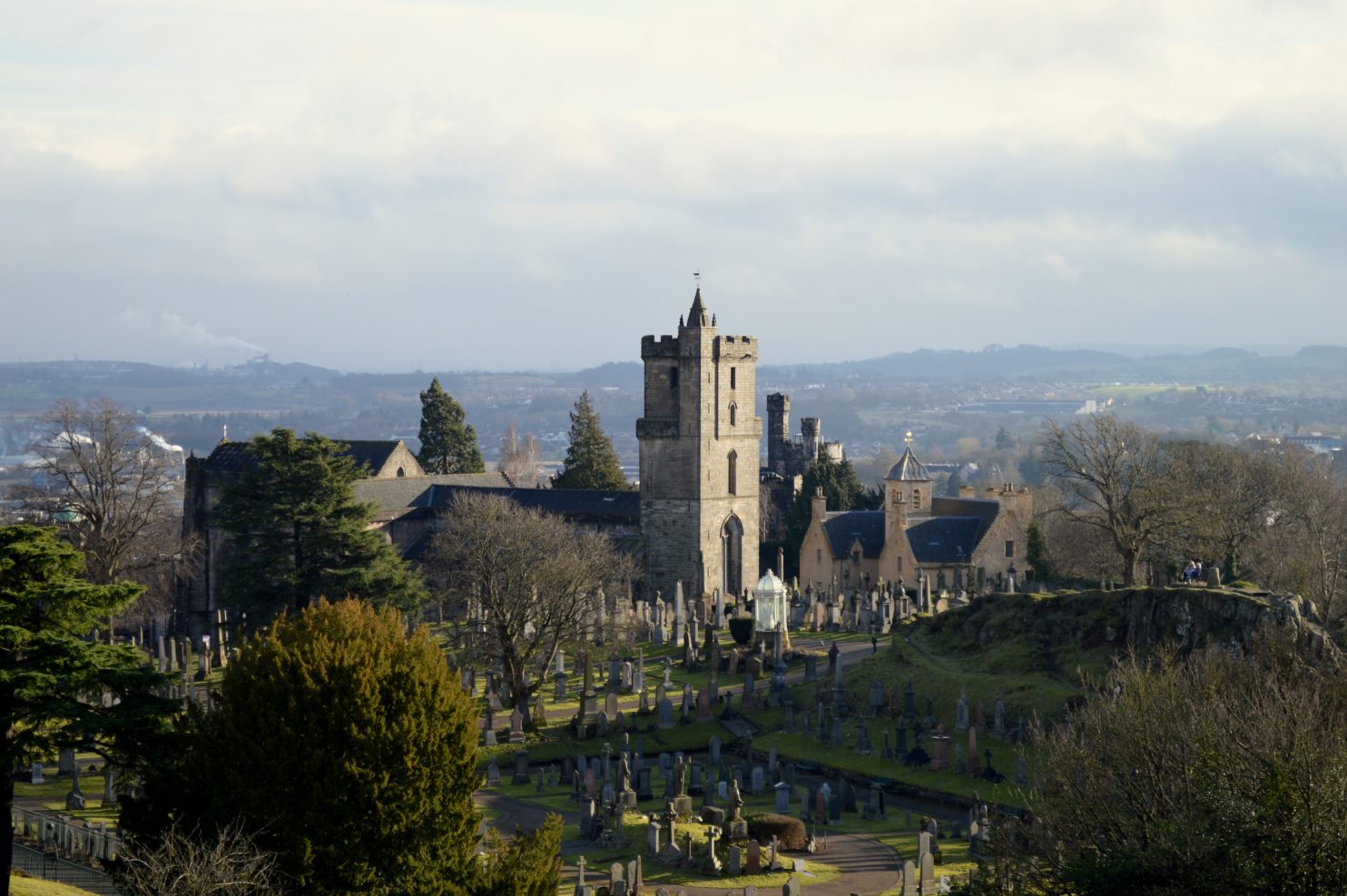
On the high streets of our towns and cities, at the centres of our villages, up country lanes, peppering our coastline – churches are central to Scotland’s built environment. Today, many of these buildings are in peril of closing their doors to the public. Approximately 800 churches in Scotland are either closing or due to close in the next few years, and with 200 closed recently, this amounts to around one third of all Scottish churches. Aiming to address this issue, the Society of Antiquaries of Scotland and Scotland’s Churches Trust have teamed up for the project Finding Futures for Scotland’s Churches. Thanks to grants from National Lottery Heritage Fund and the Pilgrim Trust, this two-year project will undertake a rapid assessment of Scotland’s at-risk church heritage and social value, and work with others to help communities find sustainable futures for their buildings.
The Challenge
All denominations are currently grappling with the issue of how to manage their estate at a time when congregations are dwindling. The church closures happening as a result are now proceeding at an unprecedented pace. Most in the built heritage sector will have been touched by the issue, whether formally through their role or simply because they are concerned about a cherished church’s planned closure. Some historically important buildings, such as Fowlis Easter (Scotland’s most complete pre-Reformation Church) and Croick (made famous by the record of the Clearances engraved on its windows) have galvanised support for closing churches, with the former a recent recipient of a grant from Architectural Heritage Fund and the latter acquired by Historic Churches Scotland. The Church of Scotland has also identified twelve ‘Signature Churches’, a scheme aimed at supporting some of their most vibrant and historic churches.
Still, there are hundreds of churches which are at risk. Many are architecturally important, others are like mini museums with important collections, and almost all of them are centres of significant intangible cultural heritage. It is also the case that we simply do not know what we might be losing because Scottish churches have long been undervalued and under-researched. There have already been accidents where historic interiors have been damaged in the closure process, and there is a real risk that we might not know what we’ve got ‘til it’s gone. The Finding Futures for Scotland’s Churches project will create a publicly accessible database to record ecclesiastical heritage and social value, to empower the communities who care for churches and help heritage organisations take a strategic view of the challenges.
The Project
With funding for two years, the project team will undertake a rapid analysis of Scotland’s at-risk ecclesiastical heritage and the social value of churches. There are several existing resources available which survey heritage, such as Historic Environment Scotland’s Trove and specialist databases, for example, of church bells. So, the first job is to collate this data and identify gaps in knowledge. Then comes the tricky task of prioritising churches with particularly high heritage and/or social value to explore in greater depth. We are creating a method of assessment that is transparent, sensitive, and necessarily speedy given the scale of church closures. Ten sites will be chosen for full recording of their heritage using Scotland Churches Trust’s Church Recording scheme as a model, alongside in-depth research and expert advice. Ten churches will also be selected for social value surveys, based on the University of Stirling’s Social Value Toolkit. Throughout, we will engage with affected communities, placing them at the front and centre of all the work we do.
Get Involved
Launched in June 2025, the project is staffed by a Research Manager and a newly-appointed Communities Officer, supported by colleagues in the Society of Antiquaries of Scotland and Scotland’s Churches Trust. Collaboration is key, and we are in dialogue with the Church of Scotland, the Sacred Landscapes initiative run by the University of St Andrews, Historic Environment Scotland, National Museums Scotland, and members of the Places of Worship Forum. In particular, we are working closely with the team at Development Trusts Association Scotland who have their own programme ‘New Futures: Former Places of Worship’ focussing on bringing church buildings into sustainable community ownership. We are always keen to find new partners, and we are establishing an action group to contribute to our research and help advise churches on the heritage assets they hold. Please contact lizzie@socantscot.org if you would like to attend our launch event in Edinburgh on the 11th of September.
To stay abreast of the progress of the project, you can find us on Bluesky @ScotChurchFutures, follow Scotland’s Churches Trust on their social media for updates, and subscribe to the Society of Antiquaries of Scotland’s public e-newsletter at www.socantscot.org/enews.
Dr Lizzie Swarbrick FSAScot is the Research Manager for the Finding Futures for Scotland’s Churches project run by the Society of Antiquaries of Scotland and Scotland’s Churches Trust. Lizzie is an art and architectural historian specialising in Scottish medieval churches, with a particular interest in how people have created, moulded, and used church buildings and their associated material culture. She joined the Society of Antiquaries in June 2025 after a Leverhulme Early Career Fellowship at the University of Edinburgh and a PhD at the University of St Andrews.
This blog is part of the second edition of the Places of Worship Forum (POWF) Newsletter which was published on 14 August 2025. To read the first edition, please click here. The newsletter aims to share the ongoing work of the group. Would you like to receive the next edition of the newsletter? Sign up here.
BACK